

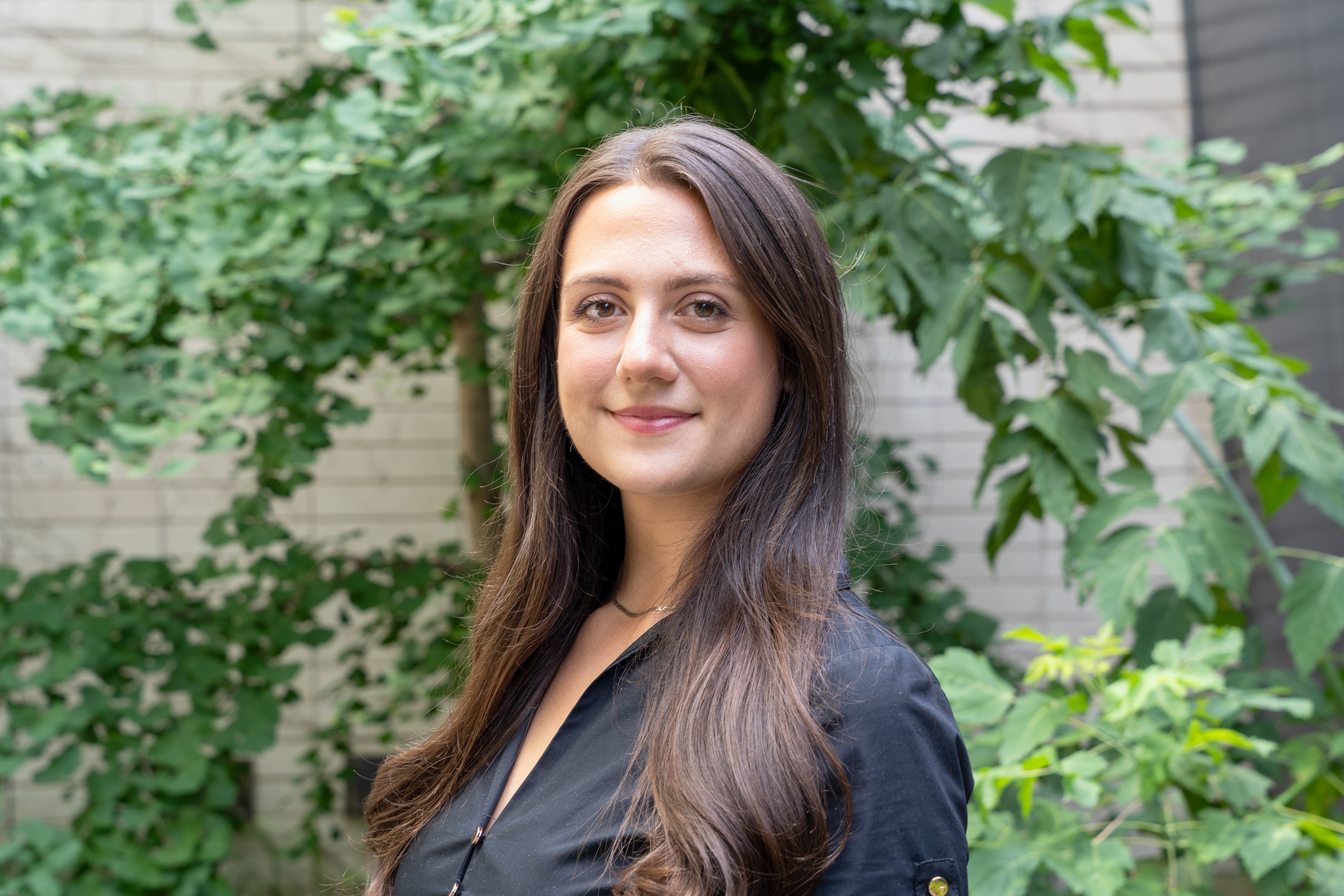
AMHIG is excited to announce the winners of our annual graduate student paper prize. Congratulations to Heather Prentice-Walz and Loa Gordon for their excellent papers. We look forward to celebrating their intellectual achievements at our annual membership meeting and at the Society for Medical Anthropology awards ceremony! Attached below are short bios on our winners along with their paper abstracts.
Biographies:
Heather Prentice-Walz (she/her) is a PhD candidate in sociocultural
anthropology at the University of California Santa Barbara. Heather’s work is an
ethnographically-informed, critical research engagement with the concept of wellbeing
in the context of foreign aid interventions in the rural Grand’Anse region of Haiti. Her
research situates foreign and development aid interventions within processes of
ongoing and accumulating disasters and examines the converging sociohistorical
processes that produce and perpetuate these disasters. Specifically, it explores the
relationships between perceptions of climate change and conceptualizations of well-
being as a means of nuancing and localizing these concepts and relating them to
structural perspectives. Her work analyzes and compares the ways that foreign aid and
development organizations and local stakeholders conceive of different dimensions of
wellbeing as a means of illuminating cyclical, problematic aid practices, and pointing to
ways of unsettling these cycles.
Loa Gordon will earn her PhD in Anthropology from McMaster University in Fall 2024. She is
also the Assistant Director of McMaster’s Centre for Advanced Research on Mental Health and Society (ARMS). Her ethnographic work attends to imaginaries of emotional wellbeing and the more-than-human entanglements of mental health care. Loa’s postdoctoral research will involve a community engaged project with the Canadian Mental Health Association Hamilton Branch to better understand intentional communities of self-care and therapeutic citizenship in changing urban landscapes.
Paper Abstracts:
Apre Tan An: Solastalgia and the Processes and Processing of Climate Change in the Grand’Anse, Haiti
Author: Heather Prentice-Walz
This paper contributes ethnographic perspectives on embodied experiences and affective relationships with climate change from communities within the rural, southwestern Grand’Anse region of Haiti. Taking the climatic disaster of Hurricane Matthew in 2016 as a case study, the chapter puts community perspectives in dialogue with the emergent concept of solastalgia, which can be broadly understood as the psychological distresses, fears, and senses of loss that people experience in the face of environmental change in their home environments (e.g., Albrecht et al. 2007; Coffey et al. 2021; Warsini et al. 2014).The paper briefly reviews literature on solastalgia, and highlights the ways in which solastalgia may be a useful analytic tool, and also the ways in which solastalgia- as it is currently conceived of- does not fully account for how climate change feels in the Grand’Anse. Ethnographic engagements from Beaux Arbres can help to broaden and strengthen understandings of solastalgia because they: 1) highlight the critical context of converging, sociohistorical processes, which destabilize fixed notions of time that render events as spatiotemporally bounded; 2) compel an emplaced engagement with solastalgia, which provides much needed perspectives from rural communities in the Grand’Anse; these perspectives emphasize the interrelatedness of the mind, body, and environment, and the ways in which these categories are politicized (and politically excluded). By way of a conclusion, the paper argues that thinking with emplaced solastalgia in Beaux Arbres troubles bounded notions of time, and impels a collapsing of binary categories, such as Albrecht’s (2009; 2011) distinction between psychoterraric (earth-related mental) and somaterratic (earth-related bodily) syndromes.
The bubble-bathification of self-care: Problematizing possibilities for restful mental health
Author: Loa Gordon
Self-care movements were born out of need among groups at the social and medical margins. Emergent anthropological conversations recognize the tension between self-care’s empowering potential and the processes of neoliberalization that divorce this configuration of care from its radical roots. This paper tracks an emerging figuration of self-care that I call ‘bubble-bathification,’ which foregrounds ‘rest’ as a therapeutic avenue toward mental health juxtaposed against environments of exhaustion. My investigation of rest is contextualized in Canadian universities where post-secondary students with mental health challenges live with systemic fatigue. Data involves cross-provincial fieldwork, interviews, and discourse analysis in conversation with students from several Canadian universities as well as the stakeholders and staff of their Student Wellness Services. Findings reveal two related areas where students’ embodied mental health generates a complicated relationship with rest. First, there are myriad structural barriers that inhibit rest, which are generated by the very sources promoting restorative breaks. Second, there is an erupting desire among young people to divest themselves from inactivity in favor of pursuing justice-oriented change to their communities. I conclude that investigations into care must view social, mental, and bodily unrest as mutually constitutive to understand how exhaustion threatens people’s selfhood. Moreover, I signal a growing sentiment among people with mental health challenges that justice-oriented activity is itself a form of self-care that both necessitates and pushes back against rest.